
Repiping in Plano, TX
A Plano home with pipes past their life does not need another patch — it needs new pipes. Repiping puts in new PEX or copper throughout, and the work is done over a few days with the water restored each evening. The local plumbing company gives the written quote after an inspection. Call (833) 878-1592.
Updated 2026-11-18. Plano, TX · Collin County · Population 293,286. Prices shown are estimates only.
- 293,286 Population
- Collin County
- 9 ZIP codes served
Before & after in Plano
Before & after
Drag the slider to compare the same spot before and after the repair.
Repiping in Plano
How much does repiping cost in Plano?
Repiping a home in Plano is priced by the job, not by the foot, because every home's pipe layout is different. As a guide, most whole-home repipes fall between $4,500 and $12,000 for PEX and $8,000 and $20,000 for copper.
Homes with a slab foundation, where pipes are rerouted through the attic, tend toward the higher end.
Those figures are typical national ranges, shown as estimates only. The local company gives a written quote after walking the home and seeing the pipes.
Ask what the quote includes — the permit, the inspection, the patching and the cleanup — so you can compare it fairly with any other quote.
The written quote is the number that matters in Plano, and it should be free to obtain. Call (833) 878-1592 to book the inspection that produces it.
The homes in Plano, Texas span 9 ZIP codes, and the local company confirms coverage by ZIP before booking.
Repiping in Plano
How long does a repipe take in Plano?
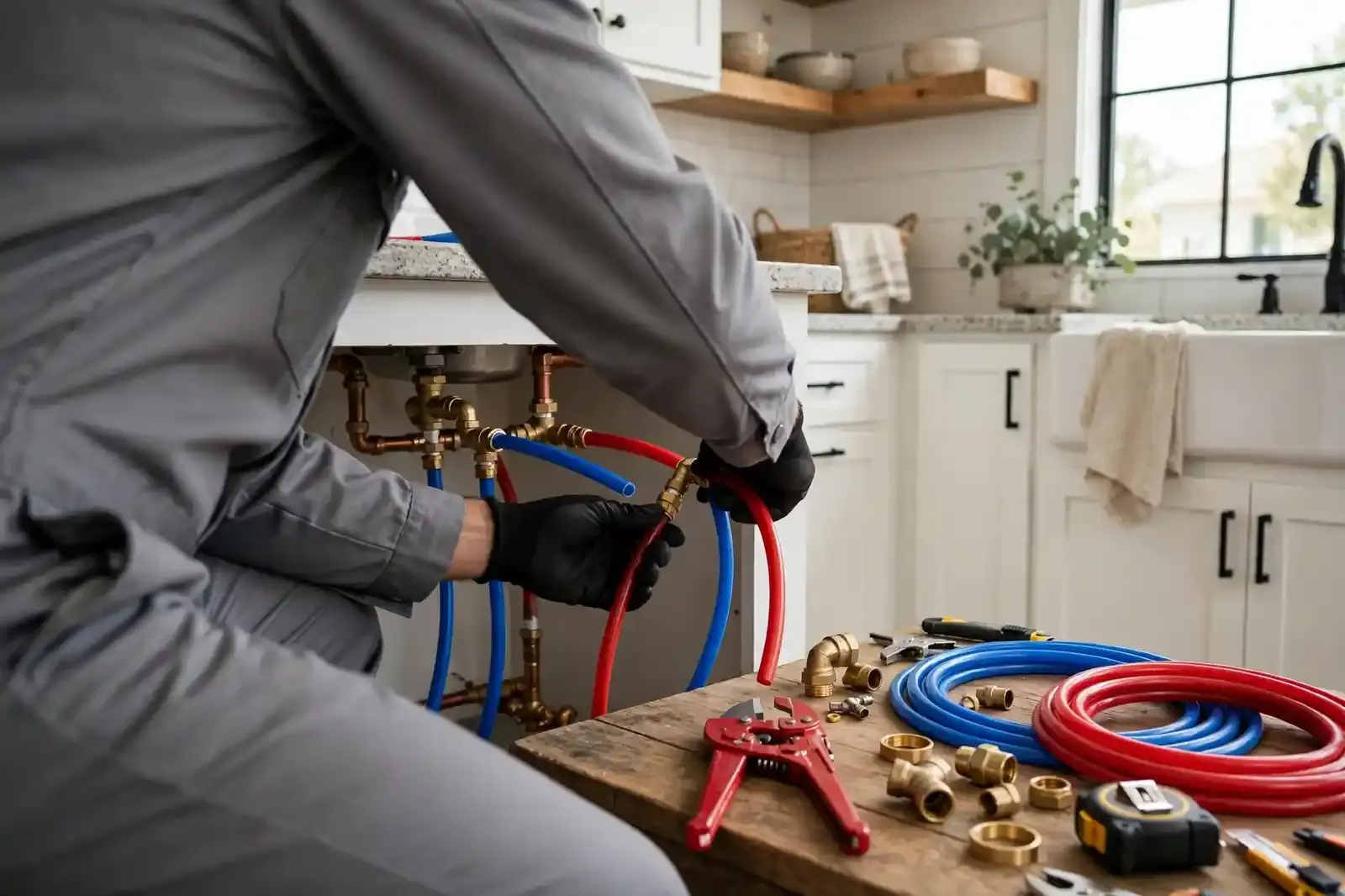
The timeline for a repipe in Plano also depends on the inspection office. The rough-in inspection is booked after the new pipes are in, and a busy office can add a day of waiting.
The crew plans around it, and the walls stay open until the inspector signs off.
Patching time depends on how many openings there were. A home with open access needs few patches; a home with finished walls needs more, and texture and paint add time.
The quote should show the full timeline, including patching, so the homeowner knows when the home is fully back to normal.
The timeline for a repipe in Plano also depends on the inspection office. A busy office can add a day of waiting while the walls stay open.
Plano sits in Collin County, and the 9 ZIP codes covered here run from 75023 to 75094.
Repiping in Plano
Permits and inspections for repiping in Plano
Repiping is not a job to do without a permit in most cities. The permit covers the rough-in inspection, which happens after the new pipes are in and before the drywall goes back.
The inspector checks that the pipe is supported, the joints are sound and the system holds pressure.
Skipping the permit saves a little money and risks more: unpermitted plumbing can be flagged in a sale, and an insurer can ask questions after a claim. A company that files the permit and books the inspection is doing the job properly.
A repipe without an inspection is a claim; a repipe with one is a fact. The record shows the work was done to code.
The homes in Plano, Texas span 9 ZIP codes, and the local company confirms coverage by ZIP before booking.
Repiping in Plano
What happens during a repipe in Plano?
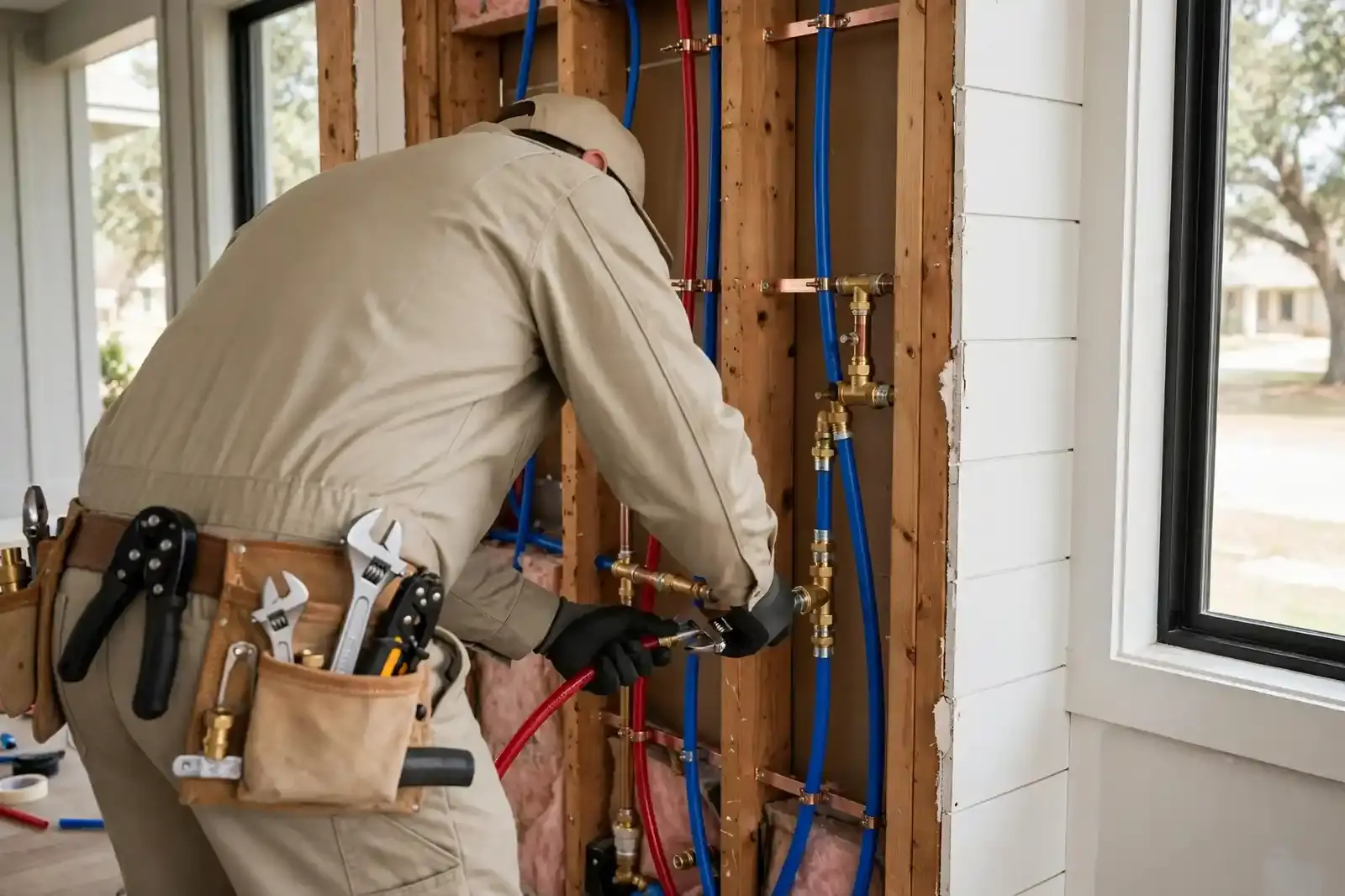
A repipe crew in Plano does not start by opening walls at random. The first step is mapping: where the main enters, where the water heater sits, and how the lines reach the kitchen, bathrooms and laundry.
That map decides the access points and keeps the openings small.
Then the crew works room by room. Old lines are cut out or capped, new PEX or copper goes in, and the water is tested before the walls are closed.
An inspection usually follows the rough-in. The last step is patching, cleanup and a final pressure check.
The crew in Plano checks in each morning with the shutoff plan for the day, so the household knows when the water will be off and when it will be back.
In Plano, about 293,286 people live across 9 ZIP codes in Collin County, and the local company covers all of them.
Repiping in Plano
Pinhole leaks and slab leaks in Plano
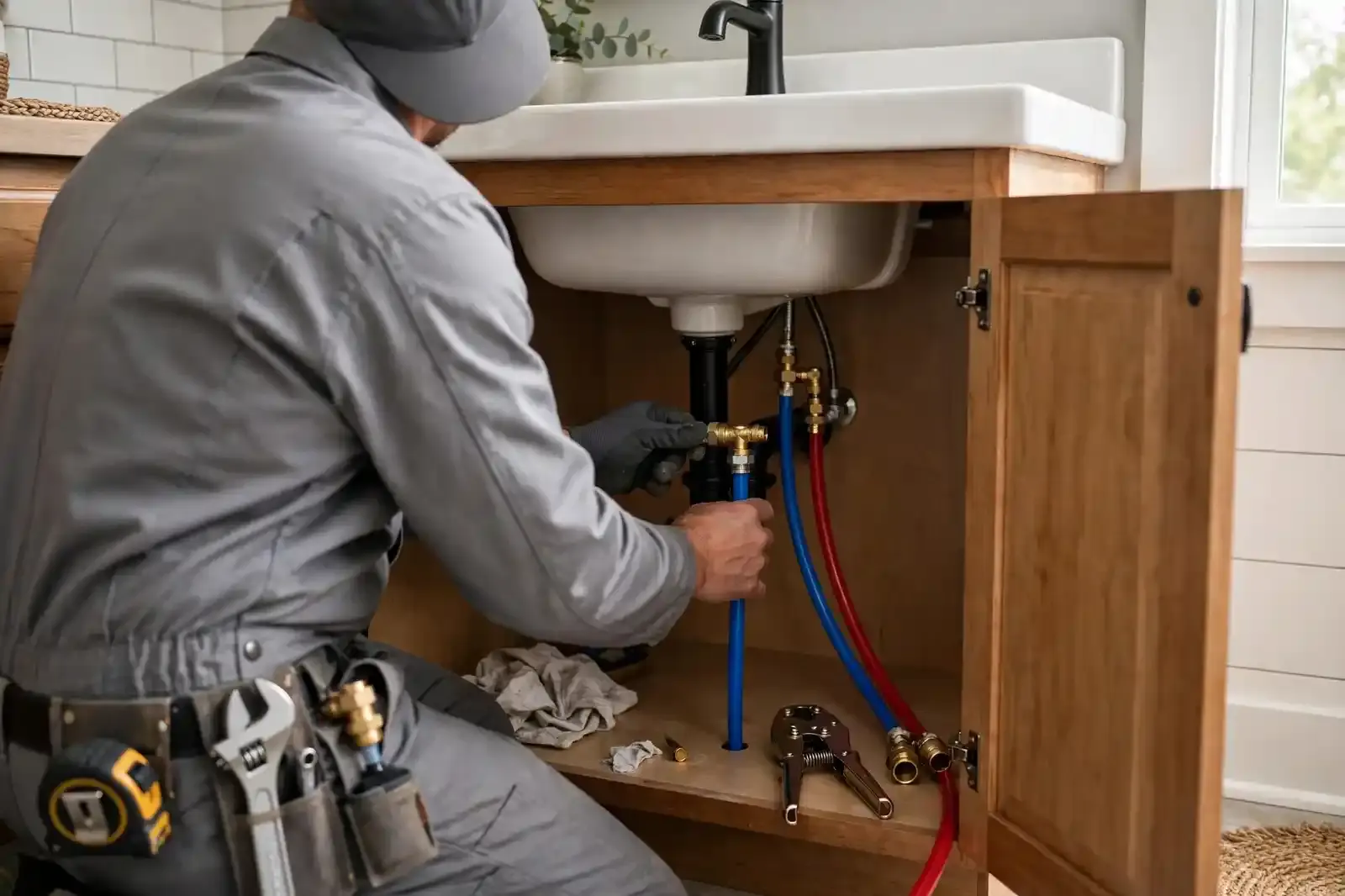
A slab leak in Plano is sometimes found by the floor, not by the meter. A warm spot on the floor, a tile that has lifted, or carpet that is damp in one place can all point to a leak under the concrete.
The crew confirms it with acoustic equipment and a pressure test before any floor is opened.
When pinholes repeat, the system is the problem, not the spot. A repipe takes the old copper out of service and replaces it with PEX or new copper.
The new lines are pressure-tested before the walls close.
A slab leak in Plano is sometimes found by the floor, not by the meter: a warm spot, a lifted tile, or damp carpet in one place.
Plano sits in Collin County, and the 9 ZIP codes covered here run from 75023 to 75094.
Repiping in Plano
What does a repipe inspection find in Plano?
The inspection maps the system from the main to every fixture: where the main enters, where the water heater sits, and how the lines reach the kitchen, bathrooms, and laundry. That map becomes the plan for the repipe, and it is drawn up before any wall is opened.
The inspection ends with a written quote: the material, the areas covered, the permit, the inspection, the patching, and the warranty. The homeowner keeps the quote and decides in their own time.
There is no charge for the call that books the visit.
Keep the inspection result with the permit number and the warranty. In Plano, that paperwork is what a buyer or an insurer asks for first.
Repiping in Plano covers the whole city — about 293,286 residents and 9 ZIP codes in Collin County.
Repiping in Plano
Low water pressure in Plano: pipes or something else?
Before blaming the pipes, a Plano homeowner can check three things: the aerators on the taps, the main shutoff valve, and the pressure regulator near the main. A shutoff that is not fully open or a regulator set too low will starve the whole home.
A plumber checks it with a gauge at the hose bib and at a tap. If the main reads well and the taps read low, the loss is inside the home's pipes.
That is a repipe decision, not a fixture decision.
Galvanized steel narrows with rust; polybutylene and old copper scale up too. A repipe in Plano restores the full bore and the pressure with it.
Repiping in Plano covers the whole city — about 293,286 residents and 9 ZIP codes in Collin County.
The Plano area in the list covers 9 ZIP codes (75023 to 75094) in Collin County. With about 293,286 people in the city, the housing stock ranges from older homes with galvanized pipe to newer builds — the inspection sorts out which a home has.
Repiping in Plano
Your water utility and shutoff in Plano
During a repipe in Plano, the water is shut off at the main during working hours and restored each evening. The crew tells the household the shutoff plan each morning, so nobody is caught by surprise.
Knowing where the meter is matters, because the street shutoff in the meter box is the backup when the inside shutoff fails. The crew can show the homeowner both on the first visit.
The water is shut off at the main during working hours and restored each evening, and the crew gives the plan each morning.
About 293,286 people live in Plano, and every one of the 9 covered ZIP codes is served from Collin County.
Repiping in Plano
After the repipe: what changes in Plano homes
After a repipe in Plano, the water heater works less hard, because it no longer has to push water through narrowed pipes. Showers run stronger, the washing machine fills faster, and the hot water arrives sooner, because the new lines are sized and routed properly.
The second change is quiet: no more drips inside walls, no more damp patches, no more calls about the same leak. The new PEX or copper is pressure-tested and inspected, and the warranty paperwork goes with the home's records.
The paperwork matters as much as the pipes: the permit, the inspection result, and the warranty go with the home's records.
About 293,286 people live in Plano, and every one of the 9 covered ZIP codes is served from Collin County.
Repiping in Plano
Repiping and your water heater in Plano?
The water heater in Plano is checked during the repipe inspection, and the crew looks at its age, its connections, and whether it is the right size for the home. A heater that is undersized will still leave showers cold, whatever the pipes do, and the crew will say so plainly.
The crew also checks the heater connections, which are often as old as the pipes. A weeping connection at the heater is a common find during a repipe inspection in Plano, and it is fixed while the walls are open rather than left to leak.
New PEX or copper lines feed the heater better than narrowed old pipe, so the hot water arrives sooner after a repipe in Plano.
Plano sits in Collin County, and the 9 ZIP codes covered here run from 75023 to 75094.
Repiping in Plano
Soil and ground movement under Plano homes
Some soils shift with moisture — swelling when wet and shrinking when dry — and that movement stresses the pipes under a home. A slab that moves can crack a line or pull a joint apart.
The old lines stay buried and capped. The new lines are pressure-tested, inspected, and patched over, and the home's water no longer runs through the ground.
Ground movement shows up as a warm spot, a lifted tile, or damp carpet, and the crew confirms it before any floor is opened.
The homes in Plano, Texas span 9 ZIP codes, and the local company confirms coverage by ZIP before booking.
Repiping in Plano
Water hardness in Plano: what it does to pipes
Hard water does not damage PEX the way it damages metal pipe, and that is one reason PEX is common in repipes in Plano. Copper scales too, though more slowly than steel.
A repipe does not change the water itself, but new PEX stays clear of scale longer than metal pipe, and new copper starts clean. The crew can test the water during the inspection and say whether a softener is worth it.
White crust on fixtures is the visible sign of hard water, and the same mineral builds up inside the pipes unseen.
Repiping in Plano covers the whole city — about 293,286 residents and 9 ZIP codes in Collin County.
Repiping in Plano
Freeze risk for pipes in Plano
The first defence against a freeze in Plano is knowing where the main shutoff is. If a pipe splits, the water must be stopped at the main within minutes, and the shutoff is usually near where the water line enters the home.
PEX handles a freeze better than copper or steel, because it can expand slightly without splitting. A repipe does not make pipes freeze-proof, but it makes them more forgiving, and the crew will point out any runs that need insulation.
PEX handles a freeze better than copper or steel, because it can expand slightly without splitting.
Plano has about 293,286 residents, and the repipe coverage here runs to 9 ZIP codes across Collin County.
Repiping in Plano
Rusty or brown water in Plano
Brown water in Plano is sometimes the water heater, not the pipes. Sediment builds up in the bottom of an old heater, and the first draw in the morning can run brown until the tank clears.
The test is to run the cold tap only: if the cold runs clear and the hot runs brown, the heater is the source.
A repipe only fixes the first one, but it is the common one in older homes. New PEX or copper removes the rust source entirely, and the water clears for good.
The rust that colours the water is the pipe wall itself wearing away, and a wall that thin eventually leaks. A repipe in Plano removes the source.
The service area in Plano covers 9 ZIP codes, from 75023 to 75094, all inside Collin County.
Repiping in Plano
Why waiting costs more in Plano
Old pipes fail on their own schedule, and it is rarely convenient. A galvanized line that has been narrowing for thirty years does not announce the day it closes up or splits.
In a Plano home the first sign is often a damp patch, a stain on a ceiling, or a water bill that jumps for no clear reason.
Waiting also narrows the options. A repipe planned in advance is scheduled, quoted and done in a few days.
A repipe forced by a burst pipe is emergency work, with water damage to clean up first. The pipe does not get younger while the decision waits.
A small leak today is a wet wall tomorrow. The water finds the lowest point, and a slow leak inside a wall can soak framing for weeks.
About 293,286 people live in Plano, and every one of the 9 covered ZIP codes is served from Collin County.
Repiping in Plano
PEX or copper: what fits Plano homes?
PEX is the usual pick in Plano for a whole-home repipe. It costs less, bends around corners with fewer joints, and flexes when water freezes instead of splitting.
Its smooth walls do not collect scale, which helps in hard water. It is rated for about 40 to 50 years.
Some homes mix the two: PEX for the long runs, copper where it shows or where heat is highest. The local plumbing company can explain the mix and price each version.
Either way, the new pipe is a large step up from galvanized steel or polybutylene.
Hard water leaves scale on metal pipe and narrows the bore over time, while PEX stays clear. The installer in Plano can look at the water and advise.
The service area in Plano covers 9 ZIP codes, from 75023 to 75094, all inside Collin County.
Repiping in Plano
Polybutylene pipes in Plano homes
Polybutylene looks harmless — smooth grey plastic — but it has a known weakness. The chlorine used to treat drinking water makes it brittle over time, and joints can let go suddenly.
In Plano, homes with this pipe are usually advised to replace it before it fails rather than after.
A replacement job swaps the grey plastic for PEX or copper, usually in two to five days. Some insurers and buyers treat polybutylene as a defect, so replacing it also helps when the home is sold.
The local company can confirm the pipe type in a single visit.
Replacing polybutylene in Plano is a standard repipe, and the new pipe is usually PEX, which fits the same routes through the home.
Repiping in Plano covers the whole city — about 293,286 residents and 9 ZIP codes in Collin County.
Repiping in Plano
Galvanized pipe in older Plano homes
If the home in Plano was built before 1970 and still has its original pipes, they are almost certainly galvanized steel: dull grey, magnetic, joined with threaded fittings. A magnet sticks to them, and a scratch shows silver-grey metal.
Replacement is the only lasting fix, and it is a standard job: new PEX or copper through the same routes, new shutoff valves at each fixture, and a pressure test at the end. Most homes finish in two to five days.
Replacement is a standard job in Plano: new PEX or copper through the same routes, new shutoff valves at each fixture, and a pressure test at the end.
Plano sits in Collin County, and the 9 ZIP codes covered here run from 75023 to 75094.
Signs you may need repiping
- Low water pressure at several taps at once
- Slow-filling washing machine or dishwasher with clean filters
- Dull grey pipe that a magnet sticks to is usually galvanized steel
- Sweating or dripping joints in a basement are a leak in progress
- A split pipe after a freeze is a sign the system is past its life
- Sputtering taps can mean air entering through a failing pipe
- Brown or rusty water, especially first thing in the morning
- Visible corrosion or green crust on exposed pipes
- Gurgling or whistling from pipes when water runs
- Hot water running out fast can mean scaled-up hot lines
How it works
- 1
Step 1 — Check the pipes first
A pressure test and a look at the pipe material and layout show what needs replacing and what can stay.
- 2
Step 2 — Written quote and permit
The material, the areas covered, the permit and the patching are all listed on the written quote before work starts.
- 3
Step 3 — Install the new lines
The crew runs new PEX or copper along the planned routes, fits new valves at each fixture, and caps the old lines.
- 4
Step 4 — Paperwork with the home
Every tap, toilet, and shower is run and checked before the crew signs off, so nothing is left untested.
- 5
Step 5 — Patch, sand, clean
Every cut the crew made is patched with drywall and sanded smooth, and the debris is taken away.
- 6
Step 6 — Final check and handover
The rough-in inspection passes, every fixture is tested, and the homeowner gets the permit number and the warranty in writing.
Repiping cost in Plano
What does it cost?
Use these ranges to plan, not to budget to the dollar. They are typical national ranges, shown as estimates only; the inspection produces the written quote.
| Service | Typical range (estimate) | Notes |
|---|---|---|
| Whole-home repipe (PEX) | $4,500 – $12,000 | Most 2–3 bed homes |
| Whole-home repipe (copper) | $8,000 – $20,000 | Longer-lasting metal pipe |
| Partial repipe (one area) | $2,000 – $6,000 | One bathroom or hot lines |
| Polybutylene replacement | $5,000 – $15,000 | Full grey-pipe swap |
| Galvanized pipe replacement | $5,000 – $15,000 | Old steel out, new pipe in |
| Pressure test & pipe inspection | $150 – $400 | Standalone visit |
Prices are estimates only. The local company that does the work sets its own final pricing.
Questions about repiping in Plano