
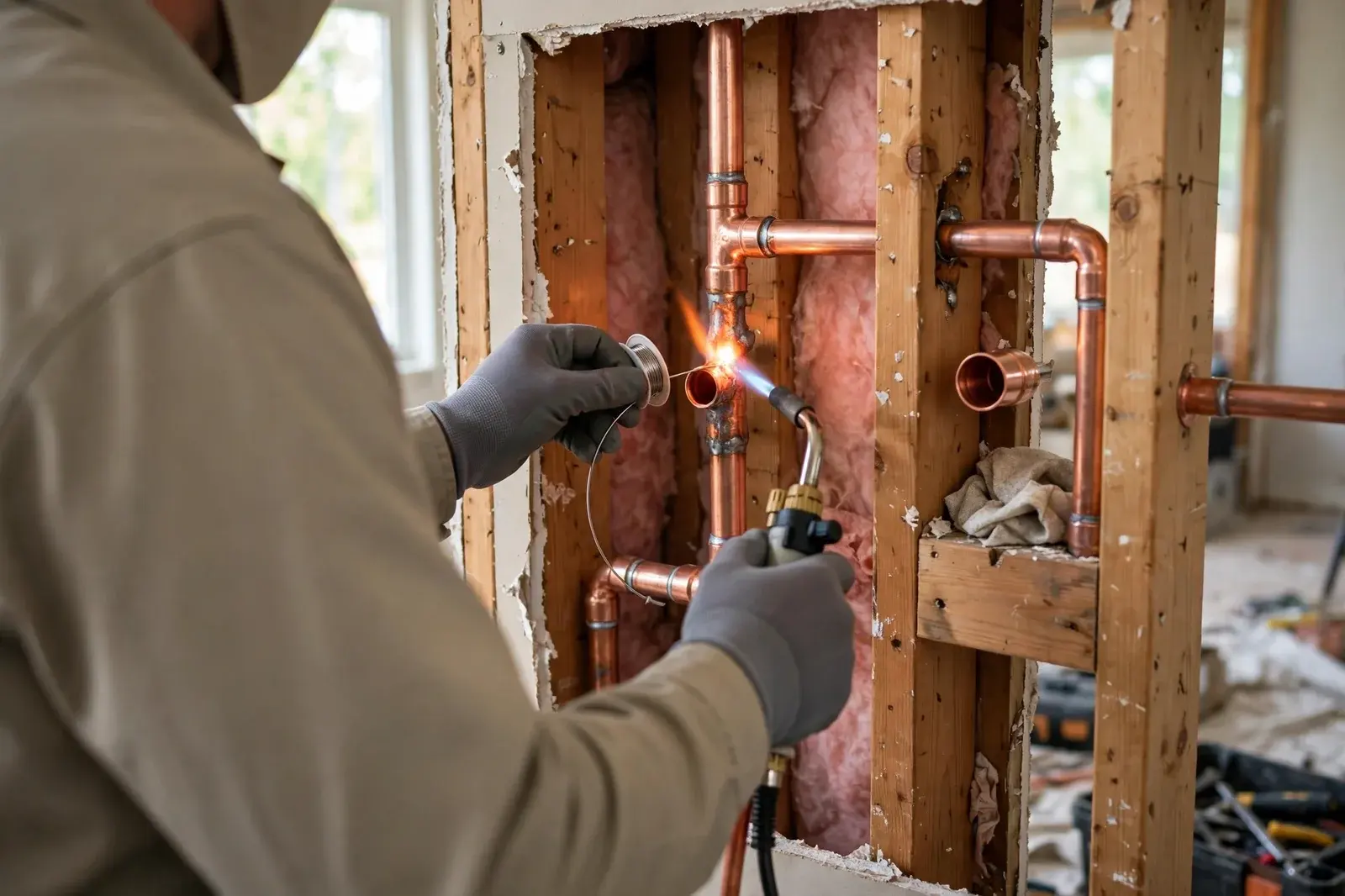
Copper Repiping Services
Copper Repiping replaces a home's worn-out water supply pipes with new copper pipe. It ends repeat leaks, restores pressure and clears rusty water. A licensed local plumbing company inspects the pipes first, then gives a written quote. The crew works room by room, and the water is usually restored each evening. Call (833) 878-1592 to book an inspection.
Updated 2026-11-18. Prices shown are estimates only.
- $150–$20,000 Typical cost range
- 6 Steps in the visit
- 12 Questions answered
Before & after — copper repiping
Before & after
Drag the slider to compare the same spot before and after the repair.
Copper Repiping
What is copper repiping?
Copper repiping replaces a home's old water supply pipes with new copper pipe. Copper has carried drinking water in US homes for close to a century: it is rigid metal pipe, joined with soldered fittings, and it handles hot water well.
A copper repipe is a familiar job for licensed plumbers, and the finished system looks the way plumbing has looked for generations — straight runs, clean joints, and metal pipe at every fixture.
Copper is chosen when the homeowner wants the longest-lived pipe available. It commonly lasts 50 years or more, and many copper systems run 70 years.
It does not sag, it handles high temperatures, and it has a track record that PEX, for all its strengths, cannot yet match in years of service. The trade-off is price and time: copper costs more and takes longer to install.
A copper repipe is the dearer option, and the quote should show why. The material costs more, and every joint is soldered by hand, which takes longer than PEX.
Copper pipe is the standard for exposed runs, and it handles hot water well. Where the pipe shows — at the water heater, in the garage, or under a sink — copper is the usual choice.
Copper Repiping
How much does a copper repipe cost?
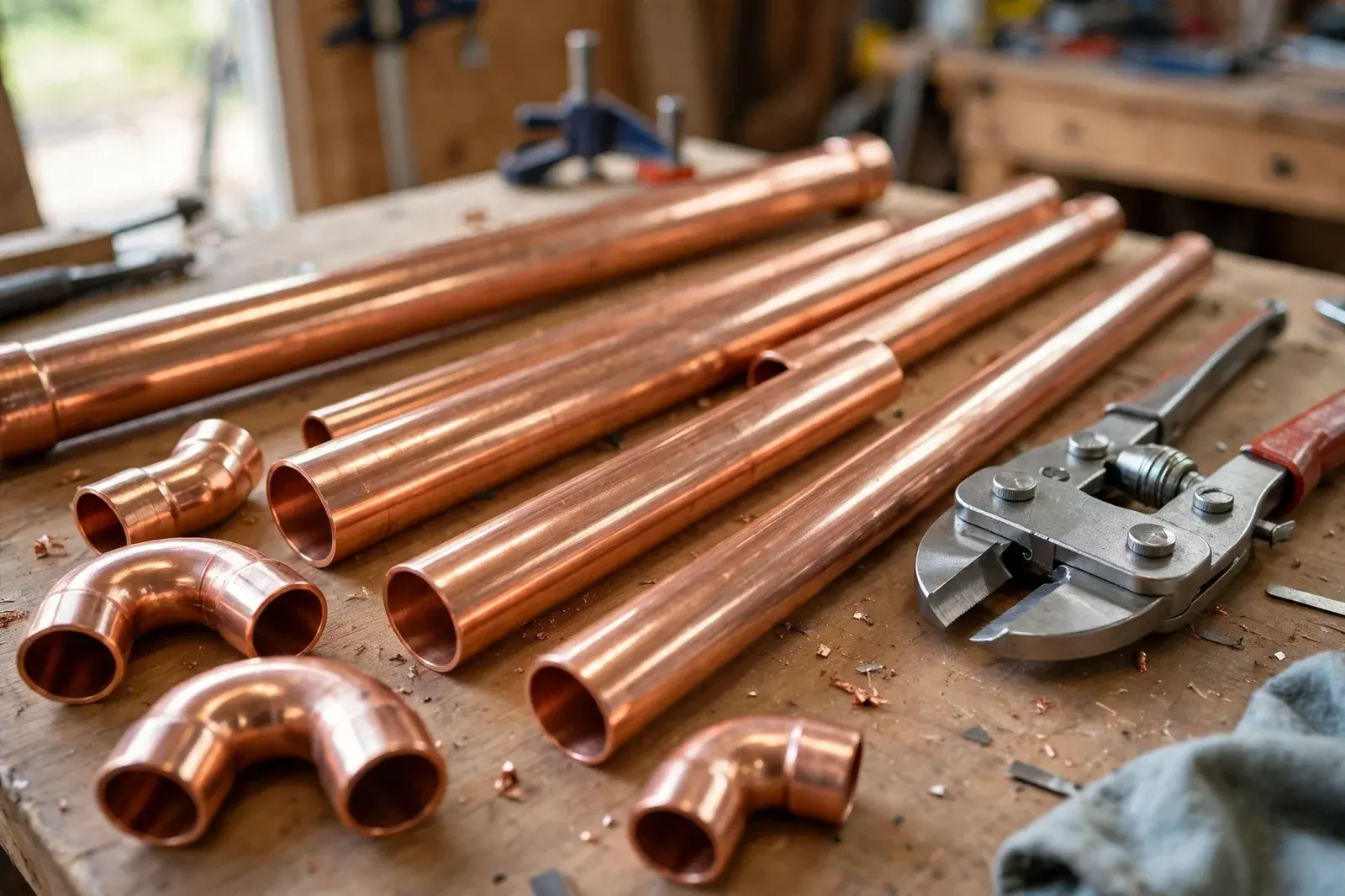
A copper repipe usually runs $8,000 to $20,000 for a whole home. A small home with a simple layout can come in near $8,000 to $11,000.
A large home with three or four bathrooms, a laundry room, and long runs can reach $15,000 to $20,000. A partial copper repipe — one bathroom group or the hot-water lines only — usually runs $3,000 to $8,000.
Copper costs more than PEX for two reasons: the material itself is dearer, and the install is slower, because every joint is cut, cleaned, fluxed, and soldered by hand. These are typical national ranges, shown as estimates only.
The written quote follows the inspection. Ask what it includes — the permit, the rough-in inspection, the patching, and the warranty on the work and the pipe.
The written quote for a copper repipe follows the inspection and reflects the home, not the average. Ask what the quote includes, including the permit, the inspection, and the patching.
The soldered joints in a copper repipe are made one at a time, and each one is checked. That is why a copper job takes about a day longer than the same job in PEX.
Copper Repiping
Why choose copper over PEX?
Lifespan is the main reason. Copper commonly lasts 50 to 70 years, and it has a century of history in US homes.
It handles hot water without softening, it stays rigid on long runs, and it does not need the UV care that PEX does. For a homeowner planning to stay in the house for decades, or for a home where the pipes are visible in a basement or utility room, copper is a natural pick.
Copper also suits homes with aggressive water in one specific way: it does not leach plastic taste, and some homeowners simply trust metal pipe more. That said, copper has its own weak point.
In some water conditions it can develop pinhole leaks, where the wall thins at a spot and lets go. The installer should look at the water and the old pipes and say plainly whether copper suits the home.
For a homeowner who wants the longest-lived pipe and does not mind paying more, copper is a sound pick. It handles heat well and lasts 50 to 70 years.
Copper does not flex when water freezes, so runs through unheated spaces need insulation. The crew checks the attic, garage, and crawl space during the inspection.
Copper Repiping
How is a copper repipe installed?

The crew maps the system first: the main entry, the water heater, and the route to every fixture. Copper is rigid, so the runs are planned in straight lengths with elbows where the pipe turns.
Each length is cut to size, the ends are cleaned, flux is applied, and the joint is soldered. It is slower work than PEX, and it needs more wall openings, because a rigid pipe cannot thread around a corner the way flexible pipe can.
Each fixture gets a new shutoff valve, and the old lines are capped and left in the walls. The system is pressure-tested, the inspector checks the rough-in before the walls close, and the drywall is patched.
A copper repipe usually takes three to five days for a whole home, about a day longer than the same job in PEX, plus a day or two for patching.
The copper crew works to the plan the inspection produced. The permit is filed, the inspection is booked, and the water is restored each evening through the job.
A copper repipe leaves the home with pipe that should last 50 to 70 years. The warranty covers the work and the material, and the paperwork goes with the home's records.
Copper Repiping
Pinhole leaks: the copper problem a repipe ends
A pinhole leak is a tiny hole in a copper pipe where the wall has thinned, often from water chemistry or flux left inside a joint. The leak itself is small, but the water runs inside the wall for days before it shows, soaking framing and drywall.
One pinhole is a repair. Several in a year mean the whole system is thinning.
A copper repipe removes the old copper that is pinholing, so it ends the cycle of patching one leak after another. Patching one hole leaves the rest of the thinned pipe in place.
New copper, installed cleanly with the joints properly fluxed and wiped, starts the clock again. If the water chemistry caused the pinholes, the installer should say so and suggest whether copper or PEX is the better replacement.
Patching after a copper repipe is sometimes a separate item, and it is better to know that before work starts than after. Ask exactly what the patching covers.
The quote for a copper repipe should show both copper and PEX prices, so the choice is the homeowner's. Copper costs more, and the quote should say why.
Copper Repiping
Does copper make noise after a repipe?
Copper can tick or knock as it expands and contracts with hot water, especially where it is held tight against framing. Good installation leaves room for movement and clips the pipe properly, with supports spaced to code.
If new pipes bang, the crew should come back and check the clips and supports.
The noise is rarely a defect in the pipe itself. It is usually a support that is too tight, a long run with no room to expand, or a pressure regulator set too high.
PEX is quieter because it flexes, but a well-installed copper system should be quiet too. Ask the installer how it supports the pipe and what it does if the system ticks after the job.
A pressure test is part of the copper inspection, and it separates the causes in minutes. Good pressure at the main with weak pressure at the taps means the pipes are the problem.
Once the copper is in, the water should run clear and strong from the first evening. If it does not, the company should be called back before the walls are patched.
Copper Repiping
How long does a copper repipe take, day by day?
A copper repipe usually takes three to five days for a whole home, about a day longer than the same job in PEX, because every joint is cut, cleaned, fluxed, and soldered by hand. Day one is mostly mapping and setup: the crew confirms the pipe material, checks the main shutoff and the pressure regulator, and marks the openings.
The water is shut off while the first lines are cut, then restored in the evening.
The middle days are the soldering: straight copper lengths run room by room, with new shutoff valves at each fixture and the old lines capped in place. The final day is the pressure test and the rough-in inspection, then patching.
The water is off only during working hours through the job, and the homeowner can stay in the home. Patching adds a day or two after the inspection passes, and the final walkthrough runs every tap, toilet, and shower with the crew before sign-off.
Copper Repiping
Copper repiping and your water pressure
Copper restores full water pressure when the cause is narrowed or scaled-up old pipe. New copper has a full bore, and the pressure at every tap comes back to what the supply provides.
If the pressure is low at the main, the regulator is the cause, and the crew will say so before the work starts. The inspection tests the pressure at the main and at the taps, and the difference between the two tells the story.
A copper repipe fixes the part the homeowner owns; the supply side belongs to the utility.
Copper Repiping
How Copper Repiping works, step by step
Copper Repiping is a planned job, and the plan is made on the first visit. The crew maps the runs, tests the pressure, and writes a quote.
The homeowner agrees the material and the scope, and the company files the permit.
Then the crew works room by room, replacing old lines and fitting new valves, and the system is pressure-tested before the walls close. The inspector signs off on the rough-in, the walls are patched, and the homeowner walks every fixture with the crew.
Copper Repiping
Copper Repiping cost breakdown: where the money goes
Most of the cost of Copper Repiping is labour: the crew's days on site, opening walls, running lines, and patching. The material is the smaller part for PEX and a larger part for copper.
The permit, the inspection, and the patching are fixed costs on top. They do not change much with the home, but they must be listed.
Ask for the quote in writing with each part shown, so the comparison with another quote is honest.
Copper Repiping
Copper Repiping or a repair: when replacement wins
A single leak is a repair, and the crew will say so. A pattern of leaks is a system, and the crew will say that too.
The difference is the pipe material and the leak history, and both are visible on the inspection.
Copper Repiping is the answer when the pattern points to the system. The quote should show both options — the repair and the replacement — so the homeowner can see the trade-off instead of being sold one of them.
Copper Repiping
What to expect during Copper Repiping
Expect dust, noise, and open walls for a few days during Copper Repiping, and expect the crew to manage all three. Floors are protected, rooms are sealed off, and the debris is taken away daily.
The water follows a schedule the crew gives each morning: off during the work, back on in the evening. The homeowner can stay in the home through the job, and the final walkthrough covers every tap, toilet, and shower before the crew leaves.
Copper Repiping
After Copper Repiping: care, warranty, and records
The new lines after Copper Repiping are low-maintenance, but the warranty is worth reading. It has two parts: the pipe maker's warranty on the material and the installer's warranty on the work.
Both should be in writing, with the length and what is covered.
Keep the warranty with the permit and the inspection result. If a problem ever appears, the paperwork is what proves the job was done, inspected, and covered.
Copper Repiping
Copper Repiping and your home's value
The value of Copper Repiping at sale time is the paperwork: the permit, the inspection result, and the warranty, kept with the home's records. A buyer sees new pipes and a clean inspection, and the plumbing leaves the negotiation.
Without it, the buyer sees old galvanized or polybutylene pipe and asks for a credit that is usually larger than the cost of the repipe itself. Doing the job before listing takes that demand off the table.
Copper Repiping
Where Copper Repiping is available
The Copper Repiping service area covers the cities listed on this site, and the coverage is confirmed by ZIP code before booking. The largest cities have the most appointments, and the smaller towns are served on the same schedule.
Whatever the city, the work is the same: new lines, new valves, a pressure test, an inspection, and patching. The local company serves the whole area, and the quote comes after the inspection in every place.
Copper Repiping
Copper Repiping and the other repipe services
Copper Repiping is one of six repipe services on this site, and they cover the whole job between them: whole-home repiping, PEX repiping, copper repiping, polybutylene replacement, galvanized pipe replacement, and partial repiping.
The inspection decides which one a home needs. A home with old steel pipe needs galvanized replacement; a home with grey plastic needs polybutylene replacement; a home where only one area is failing may need only a partial repipe.
The quote names the service, so the homeowner knows what is being done.
Copper Repiping
Reading the signs: what they mean for Copper Repiping
The signs of failing pipe are easy to miss one at a time, and this page puts them together for Copper Repiping. A water bill that jumps, a damp patch with no fixture above it, and hot water running out sooner than it used to.
Any one of those can have another cause. Together, they point to the system, and the inspection is the way to be sure before spending anything.
Copper Repiping
Questions to ask before Copper Repiping
Before Copper Repiping starts, the homeowner should ask five questions. What material is being used, and why?
Which rooms are covered? Is the permit and inspection included?
What does the patching cover? And what does the warranty say?
A good company answers all five plainly before any work starts, and puts the answers in the written quote. If a company will not answer them, that is an answer too.
Copper Repiping
How Copper Repiping is inspected
Every Copper Repiping job is inspected, and the inspection is the part that protects the homeowner. The inspector is from the city or county, not the company, and the permit number is the record of it.
If the inspector finds a problem, the crew fixes it and the inspection is repeated. The walls are not closed until the inspection passes, and the permit number goes to the homeowner with the warranty.
Copper Repiping
Copper Repiping in older homes
The older the home, the more the repipe is worth doing on a planned schedule rather than after a burst. A burst in an old home does more damage, because the walls and floors are harder to dry and repair.
Copper Repiping in an older home takes a few days longer than in a newer one, mostly because of access and patching. The crew works room by room, and the water is restored each evening through the job.
Copper Repiping
The materials used in Copper Repiping
What is in the walls after Copper Repiping should be written down: the pipe material, the fittings, the valves, and the warranty on each. The quote is where that list lives.
PEX comes in two systems, A and B, and copper comes in types L and M. The installer picks the one that suits the home's water and layout, and the homeowner should be able to read the choice on the quote.
Copper Repiping
Timing your Copper Repiping
Book Copper Repiping when the signs say the system is failing, not when the ceiling says it has. The inspection takes one visit, and the quote follows it.
The work is usually booked a few weeks out, and the crew gives a schedule before it starts. The water is off during working hours and back on each evening, so the household's routine bends rather than breaks.
Signs you may need copper repiping
- Pinhole leaks appearing in different places
- Green crust on copper joints and fittings
- A copper pipe that has burst at a joint
- Brown water from an ageing copper system
- Low pressure that a cleaning did not fix
- Copper pipe past 50 years with a leak history
- A water bill that climbs with no new use in the home
- Damp patches on a wall or ceiling with no fixture above
- Hot water running out sooner than it used to
- Pipes knocking or groaning when a tap opens
How it works
- 1
Step 1 — Inspect and map
The crew tests the pressure, checks the old copper for thinning and maps the runs.
- 2
Step 2 — Quote and permit
The written quote lists copper pipe, the areas covered and the patching. The company files the permit.
- 3
Step 3 — Solder the new copper
Straight copper lengths are cut, cleaned, fluxed and soldered joint by joint, with new valves at each fixture.
- 4
Step 4 — Test, inspect and patch
The system is pressure-tested, the rough-in is inspected, and the walls are patched.
- 5
Step 5 — Patch and finish
The crew patches every opening, sands it smooth, and leaves the walls ready for texture and paint.
- 6
Step 6 — Walkthrough and records
The homeowner runs every fixture with the crew, and the permit number, inspection result, and warranty are left with the home's records.
Copper Repiping cost
What does it cost?
All figures are typical national ranges, shown as estimates only. The written quote from the local company replaces them once the pipes have been inspected.
| Service | Typical range (estimate) | Notes |
|---|---|---|
| Whole-home copper repipe | $8,000 – $20,000 | Most 2–3 bed homes |
| Partial copper repipe (one area) | $3,000 – $8,000 | One bathroom or hot lines |
| Copper repipe, small home | $8,000 – $11,000 | 1–2 bed, simple layout |
| Copper repipe, large home | $15,000 – $20,000 | 4+ bed, many fixtures |
| Pinhole leak repair (single) | $300 – $800 | One spot, not a system fix |
| Pressure test & pipe inspection | $150 – $400 | Standalone visit |
Prices are estimates only. The local company that does the work sets its own final pricing.
Questions about copper repiping