

Repiping in Durham, NC
In Durham, repiping is a full replacement of the water supply pipes, usually with PEX or copper. It is the answer for old galvanized or polybutylene pipe, repeated leaks and low pressure. A licensed local company does the work and handles the permit and inspection. Call (833) 878-1592.
Updated 2026-11-18. Durham, NC · Durham County · Population 301,870. Prices shown are estimates only.
- 301,870 Population
- Durham County
- 16 ZIP codes served
Before & after in Durham
Before & after
Drag the slider to compare the same spot before and after the repair.
Repiping in Durham
How much does repiping cost in Durham?
For a home in Durham, Durham County, the usual whole-home repipe range is $4,500 to $12,000 in PEX and $8,000 to $20,000 in copper. A partial repipe — one bathroom group, or the hot-water lines only — usually runs $2,000 to $6,000.
A pressure test and pipe inspection on its own is typically $150 to $400.
Patching is the part people forget. Opening walls to reach pipes means drywall work after, and the quote should say whether patching, texture and paint are included.
These are estimates only — the local company's written quote is the real figure for a home in Durham.
Prices vary by home, and the only price that counts for a home in Durham is the one written after the inspection.
The service area in Durham covers 16 ZIP codes, from 27701 to 27722, all inside Durham County.
Repiping in Durham
PEX or copper: what fits Durham homes?
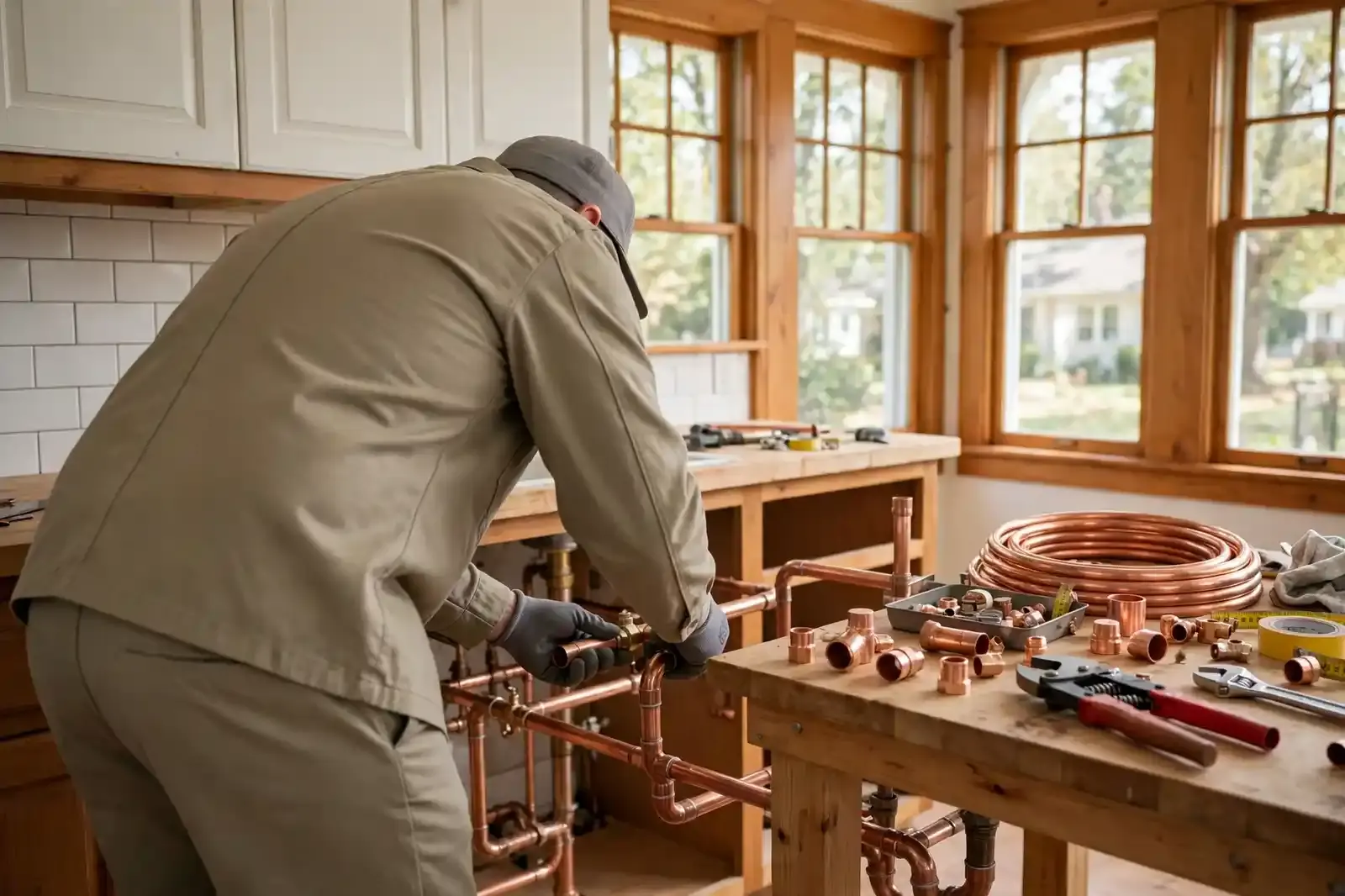
A Durham homeowner choosing pipe material should weigh three things: cost, life and water. PEX costs less, lasts about 40 to 50 years, and shrugs off hard water.
Copper costs more, lasts 50 to 70 years, and suits hot-water runs well.
Neither is wrong. Some homeowners pick copper for its track record; others pick PEX for the price and the fewer joints.
The installer should state the warranty for each and let the water test, not the sales pitch, decide.
Copper costs more up front and lasts longer. PEX costs less and installs faster.
The written quote in Durham should show both, so the decision is the homeowner's.
Repiping in Durham covers the whole city — about 301,870 residents and 16 ZIP codes in Durham County.
Repiping in Durham
How long does a repipe take in Durham?
For a home in Durham, expect two to five days of pipe work for a full repipe, plus patching. Small homes finish fast; large homes with many fixtures and long runs take longer.
Homes where the pipes are rerouted through the attic take a little longer than homes where the old routes are reused.
The water shutoff is the part people worry about most, and it is limited: off during the working day, back on in the evening. The crew gives a shutoff plan each morning.
The quote in Durham should show the full timeline, including patching, so the homeowner knows when the home is fully back to normal.
The homes in Durham, North Carolina span 16 ZIP codes, and the local company confirms coverage by ZIP before booking.
Repiping in Durham
Pinhole leaks and slab leaks in Durham
Slab leaks are supply leaks under the concrete floor. The signs are a warm spot on the floor, a water bill that jumps, the sound of running water when nothing is on, or damp flooring.
In Durham, homes with pipes in the slab are the ones at risk.
Many homeowners choose a re-route instead — a repipe that runs new lines through the attic or walls and abandons the slab lines entirely. It costs more than one patch, but it stops the repeat slab leaks that these homes often suffer.
When pinholes repeat in Durham, the system is the problem, not the spot. A repipe takes the old copper out of service and ends the cycle.
Durham sits in Durham County, and the 16 ZIP codes covered here run from 27701 to 27722.
Repiping in Durham
Rusty or brown water in Durham
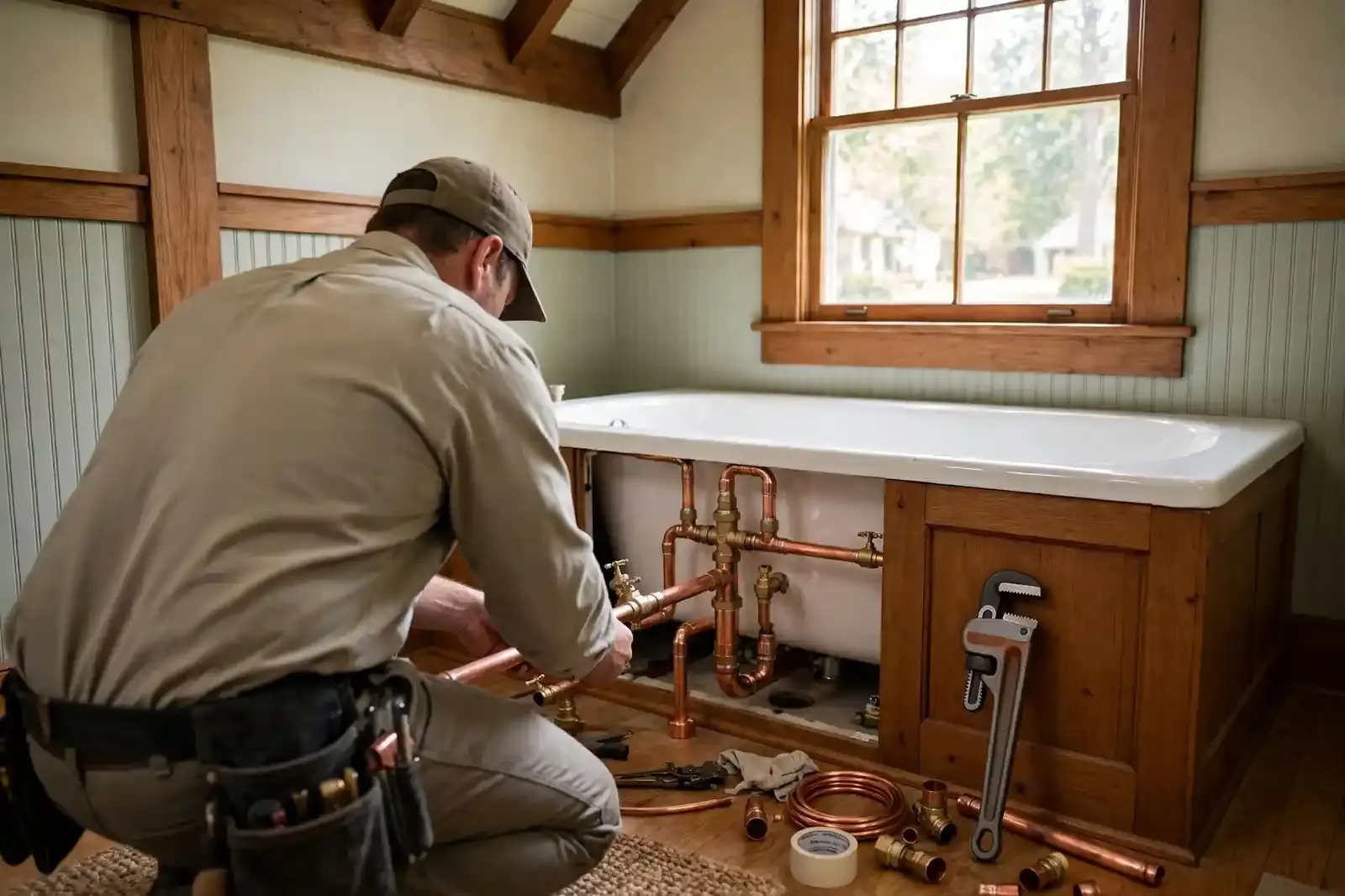
If the water in a Durham home runs brown after a holiday or a weekend away, the cause is almost always the pipes. Water sitting in rusting galvanized steel picks up colour and grit, and the first draw shows it.
The fix is replacement, not a filter: a filter catches the flakes but leaves the thinning pipe in the wall. PEX or copper has no rust to shed.
After a repipe the water runs clear, and the aerators stop clogging with flakes.
A repipe only fixes rust that comes from the home's own pipes, but that is the common case in older homes in Durham with galvanized steel.
In Durham, about 301,870 people live across 16 ZIP codes in Durham County, and the local company covers all of them.
Repiping in Durham
Why waiting costs more in Durham
A small leak is cheap to ignore and expensive to live with. Water from a pinhole leak soaks framing, subfloor and drywall for weeks before anyone sees it, and by then the repair is a repipe plus carpentry.
In Durham, where many homes still run their original pipes, one leak is often the first of several.
Waiting also narrows the options. A repipe planned in advance is scheduled, quoted and done in a few days.
A repipe forced by a burst pipe is emergency work, with water damage to clean up first. The pipe does not get younger while the decision waits.
A small leak today is a wet wall tomorrow. The water finds the lowest point, and a slow leak inside a wall can soak framing for weeks.
In Durham, about 301,870 people live across 16 ZIP codes in Durham County, and the local company covers all of them.
In Durham, the work covers 16 ZIP codes, from 27701 to 27722. The home's county is Durham County, and the city population is about 301,870.
The local company serves the whole city, and the quote is based on the home, not the neighbourhood.
Repiping in Durham
Galvanized pipe in older Durham homes
A galvanized system in Durham is a system at the end of its life. The zinc coating is gone, the steel is rusting, and every year the inside bore gets smaller.
Fixtures clog with rust flakes, pressure falls, and leaks start at the threaded joints.
In Durham, the answer for a galvanized system is replacement. New PEX or copper restores pressure, clears the water and ends the leak cycle.
The job takes a few days and the walls are patched after. The old steel is capped and left in place.
Galvanized pipe in Durham has a working life of roughly 40 to 60 years, and most of it is past that now. The signs are familiar and easy to check.
Durham has about 301,870 residents, and the repipe coverage here runs to 16 ZIP codes across Durham County.
Repiping in Durham
Your water utility and shutoff in Durham
A main shutoff that is seized or corroded is a problem on its own, and the repipe is the time to fix it. Every fixture gets a new shutoff valve as part of the job, and the main shutoff is replaced too if it is worn.
After the work in Durham, the homeowner can stop the water at one tap or at the main, and both valves work the way they should. That is part of what the final walkthrough checks.
The main shutoff is the first thing to reach in a leak, and the crew in Durham shows the homeowner where it is on the first visit.
Repiping in Durham covers the whole city — about 301,870 residents and 16 ZIP codes in Durham County.
Repiping in Durham
Soil and ground movement under Durham homes
Where pipe meets soil, corrosion can work from the outside in, especially on older steel. A line buried without protection rusts faster than one in a dry wall.
The lasting fix for a slab leak is a reroute: new lines through the attic or walls, with the old slab lines capped and left in place. Breaking the slab to patch one spot leaves the rest of the old line under the floor.
A home that has had one slab leak often has more coming, because the rest of the old line is the same age and in the same soil.
Repiping in Durham covers the whole city — about 301,870 residents and 16 ZIP codes in Durham County.
Repiping in Durham
Polybutylene pipes in Durham homes
Polybutylene was used in Durham homes built from the late 1970s to the mid-1990s, and the pipe is now old enough that its failure record is the whole story. The chlorine in treated water makes it brittle, and the fittings are the weak point.
A fitting can let go with no warning, and the water release is large.
A replacement job swaps the grey plastic for PEX or copper, usually in two to five days. Some insurers and buyers treat polybutylene as a defect, so replacing it also helps when the home is sold.
The local company can confirm the pipe type in a single visit.
Grey plastic pipe in a Durham home is worth checking, even if it has never leaked. The failure, when it comes, is sudden and the water release is large.
The homes in Durham, North Carolina span 16 ZIP codes, and the local company confirms coverage by ZIP before booking.
Repiping in Durham
Low water pressure in Durham: pipes or something else?
Pressure trouble in Durham has a short list of causes, and the pipes sit at the top of it for older homes. Rust and scale narrow the bore, so less water gets through even though the main supply is fine.
The shower runs weak, the washing machine fills slowly, and the garden hose is a trickle.
When the gap is large, the home's own pipes are eating the pressure — usually rust-narrowed galvanized steel or scaled copper. Replacing them with PEX or copper brings the inside pressure back up to the main's level.
The local company runs this test as part of the inspection.
A gauge on the main shows what the supply delivers, and a gauge at a tap shows what the home keeps. The gap between them is the diagnosis.
Durham has about 301,870 residents, and the repipe coverage here runs to 16 ZIP codes across Durham County.
Repiping in Durham
After the repipe: what changes in Durham homes
After a repipe in Durham, the first thing most homeowners notice is the water: clear from the first glass, and stronger at the shower. The rust flakes in the aerators stop, and the brown water in the morning is gone.
The other change is on paper. The permit and inspection record, the warranty and the material list all go to the homeowner.
Those documents matter at sale time, when a buyer wants proof the repipe was done and inspected.
The first thing most homeowners in Durham notice after a repipe is the water: clear from the first glass, and strong at every tap.
In Durham, about 301,870 people live across 16 ZIP codes in Durham County, and the local company covers all of them.
Repiping in Durham
What happens during a repipe in Durham?
The repipe process in Durham follows the same shape in most homes. First, a pressure test and a look at the pipes.
Second, a written quote with the material, the areas covered and the patching scope. Third, the install — new lines, new valves, and a test at every fixture.
Then comes the rough-in inspection, then patching and a final walkthrough. The homeowner checks every tap, toilet and shower with the crew before signing off.
The whole job, patching included, usually wraps up inside a week.
The crew in Durham checks in each morning with the shutoff plan for the day, so the household knows when the water will be off and when it will be back.
Durham has about 301,870 residents, and the repipe coverage here runs to 16 ZIP codes across Durham County.
Repiping in Durham
Repiping and your water heater in Durham?
During a repipe in Durham, the water heater is switched off while the water is off, so it does not run dry and overheat. The crew drains the lines, replaces the supply pipes, and then refills the system and relights or restarts the heater.
The hot water is tested at every fixture before the crew signs off.
Replacing the heater at the same time as the repipe is a practical choice when it is old. The walls are already open, the water is already off, and the crew is already on site.
The quote should list the heater separately, so the homeowner can see what it adds.
If the heater is replaced during the repipe in Durham, the new one is connected to the new lines and tested at every fixture.
The homes in Durham, North Carolina span 16 ZIP codes, and the local company confirms coverage by ZIP before booking.
Repiping in Durham
Permits and inspections for repiping in Durham
The inspection stage of a repipe in Durham is straightforward. After the new PEX or copper is run, the crew pressure-tests the system and calls the inspector.
The inspector looks at the pipe supports, the fitting quality and the test result, then signs off.
If anything needs fixing, it is fixed while the walls are still open — which is the point of inspecting at that stage. The local company handles the scheduling, and the homeowner does not need to be present, though many choose to be.
A repipe without an inspection is a claim; a repipe with one is a fact. The record shows the work was done to code.
With about 301,870 residents, Durham is one of the larger cities in North Carolina where repiping is available, and the local company serves the whole city.
Repiping in Durham
What does a repipe inspection find in Durham?
An inspection in Durham looks at more than the pipes. The crew checks the main shutoff, the pressure regulator, and the water heater connections, because those are often as old as the pipes and just as likely to fail.
A seized shutoff or a drifting regulator is fixed as part of the job.
The map also finds the surprises: a bathroom added in the 1980s with polybutylene, a kitchen moved in a renovation, or pipes that change material halfway through the house. The quote reflects the map, not a guess.
The inspection in Durham also looks at the water itself. Hard water and high pressure both shape the material choice, and the crew can advise.
Durham sits in Durham County, and the 16 ZIP codes covered here run from 27701 to 27722.
Repiping in Durham
Water hardness in Durham: what it does to pipes
White crust on a faucet or a shower head is the visible sign of hard water in Durham, and the same mineral is building up inside the pipes where it cannot be seen.
If the water is very hard, the new pipes will scale up more slowly than the old ones, but a softener is still the fix for hard water itself. The repipe and the softener are two different jobs, and the crew will say so plainly.
White crust on fixtures is the visible sign of hard water, and the same mineral builds up inside the pipes unseen.
About 301,870 people live in Durham, and every one of the 16 covered ZIP codes is served from Durham County.
Repiping in Durham
Freeze risk for pipes in Durham
The first defence against a freeze in Durham is knowing where the main shutoff is. If a pipe splits, the water must be stopped at the main within minutes, and the shutoff is usually near where the water line enters the home.
The crew shows the homeowner where it is on the first visit. Insulating exposed runs is the second defence, and the repipe is the time to do it, while the walls are open.
Knowing where the main shutoff is matters most in a freeze. The crew in Durham shows the homeowner where it is on the first visit.
With about 301,870 residents, Durham is one of the larger cities in North Carolina where repiping is available, and the local company serves the whole city.
Signs you may need repiping
- Low water pressure at several taps at once
- Sweating or dripping joints in a basement are a leak in progress
- A warm slab spot or damp floor can mean a leak under the concrete
- Water that smells metallic or tastes of rust
- Visible corrosion or green crust on exposed pipes
- Brown or rusty water, especially first thing in the morning
- Knocking pipes can mean loose supports or pressure trouble in old lines
- Insurers ask about polybutylene because of its failure record
- Aerators that keep clogging with rust flakes point to corroding pipe
- Damp patches with no fixture above them often trace back to a supply line
How it works
- 1
Step 1 — Inspection and pressure test
The crew looks at the exposed pipe near the heater and the main to find whether it is steel, plastic, or copper.
- 2
Step 2 — Written quote first
The material, the areas covered, the permit and the patching are all listed on the written quote before work starts.
- 3
Step 3 — Run the new pipe
New PEX or copper runs through the walls, attic or crawl space. Each fixture gets a new shutoff valve, and old lines are capped.
- 4
Step 4 — Test and close up
The crew clears debris and vacuums the work rooms daily, so the home stays liveable through the job.
- 5
Step 5 — Repair the openings
Drywall patching follows the pipe work, and the walls are left smooth and ready for texture and paint.
- 6
Step 6 — Walkthrough and records
The homeowner signs off after running every fixture, and the warranty and inspection result stay with the home's records.
Repiping cost in Durham
What does it cost?
These are typical national ranges, shown as estimates only. A written quote after the inspection is what counts — it reflects the home, not the average.
| Service | Typical range (estimate) | Notes |
|---|---|---|
| Whole-home repipe (PEX) | $4,500 – $12,000 | Most 2–3 bed homes |
| Whole-home repipe (copper) | $8,000 – $20,000 | Longer-lasting metal pipe |
| Partial repipe (one area) | $2,000 – $6,000 | One bathroom or hot lines |
| Polybutylene replacement | $5,000 – $15,000 | Full grey-pipe swap |
| Galvanized pipe replacement | $5,000 – $15,000 | Old steel out, new pipe in |
| Pressure test & pipe inspection | $150 – $400 | Standalone visit |
Prices are estimates only. The local company that does the work sets its own final pricing.
Questions about repiping in Durham